
What's in our soil, and what we are doing about it.
We track the soil, not the crop, because fertility drives everything that follows. Soil biologists test our soil and compost under a microscope and count the soil food web living in them: the bacteria, fungi, protozoa and nematodes that feed plant roots. Results go on this page as they are confirmed, including what still needs work.
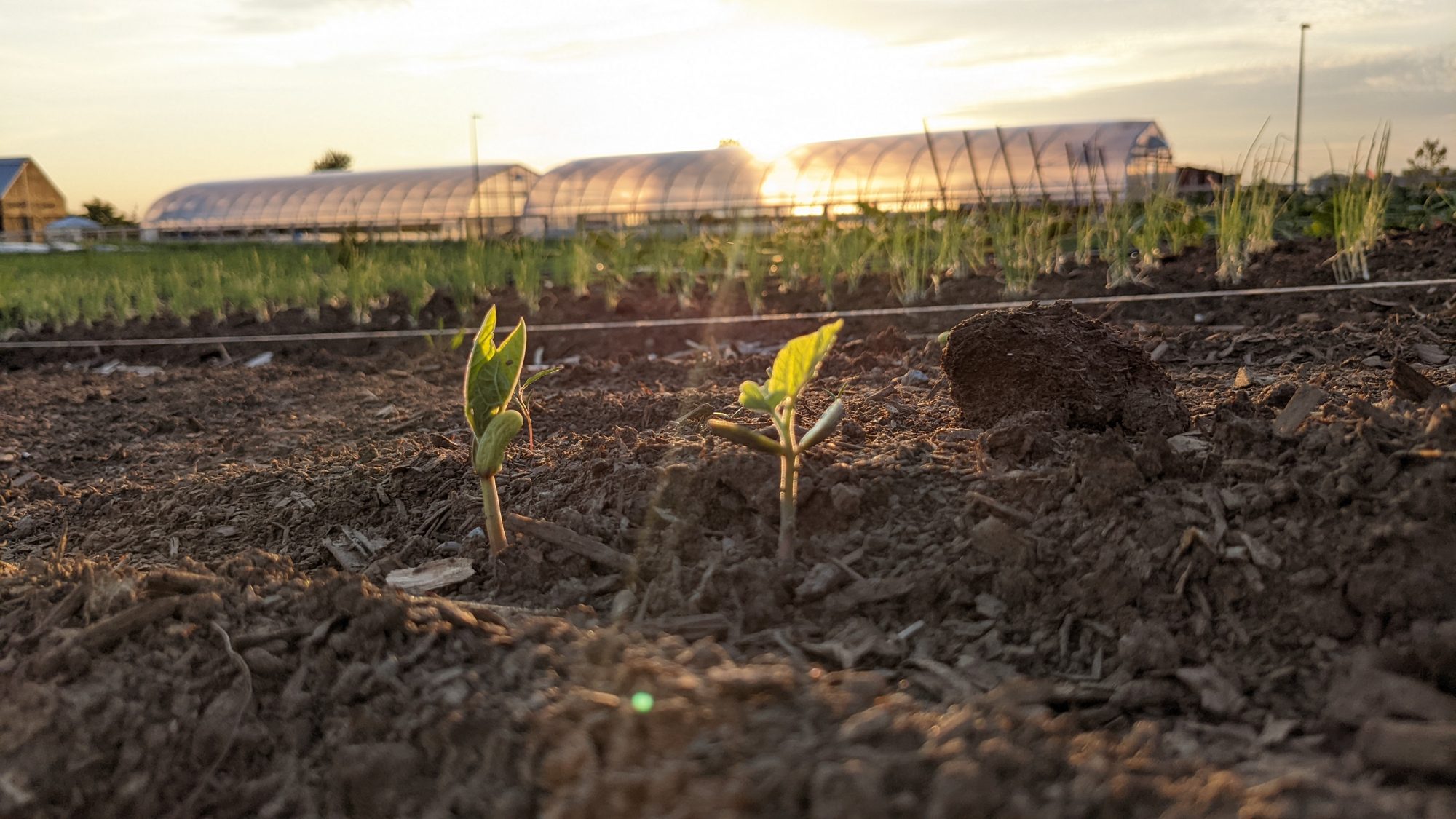
How we feed the soil
Feed the soil first. The crops follow.
Every season starts with what goes into the ground before the seeds do. This is regenerative agriculture in Toronto, practised bed by bed at Downsview Park.
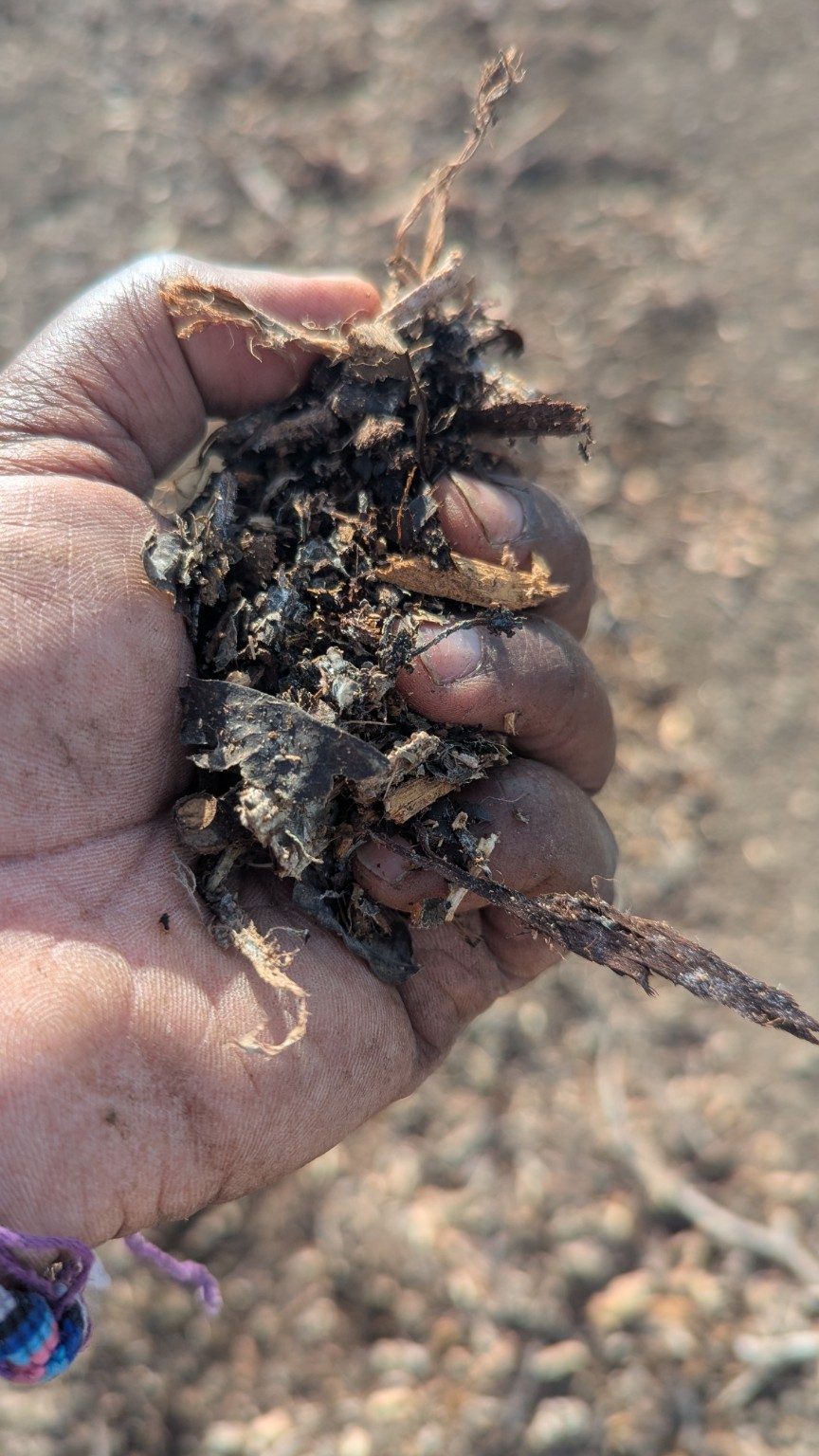
Compost before planting
Beds get compost before every planting. In 2026 we spread about 80 cubic yards of mushroom compost blended with biochar.
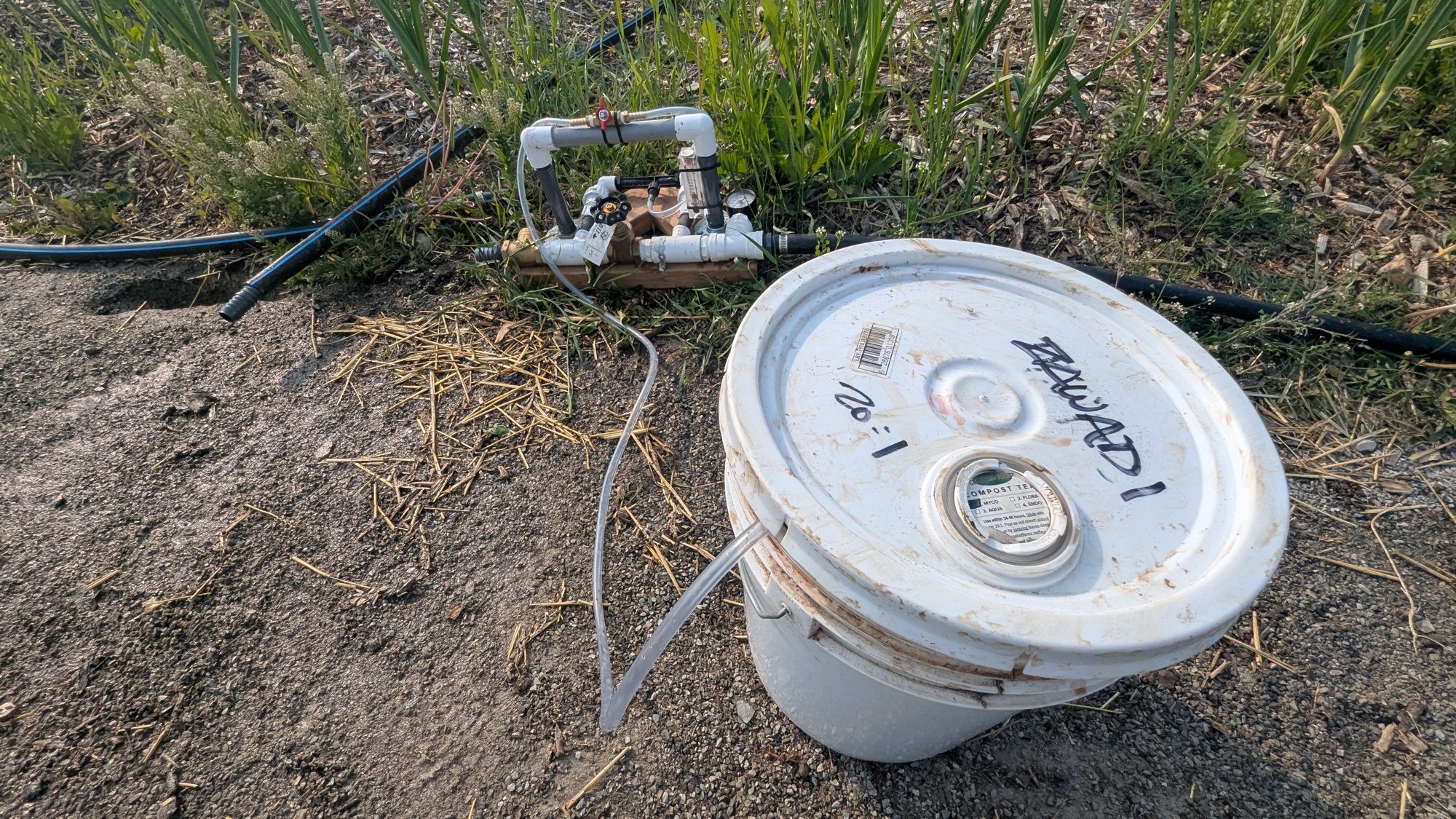
Compost tea on the drip lines
We feed compost extract to the beds through the irrigation, so soil life reaches the roots directly.
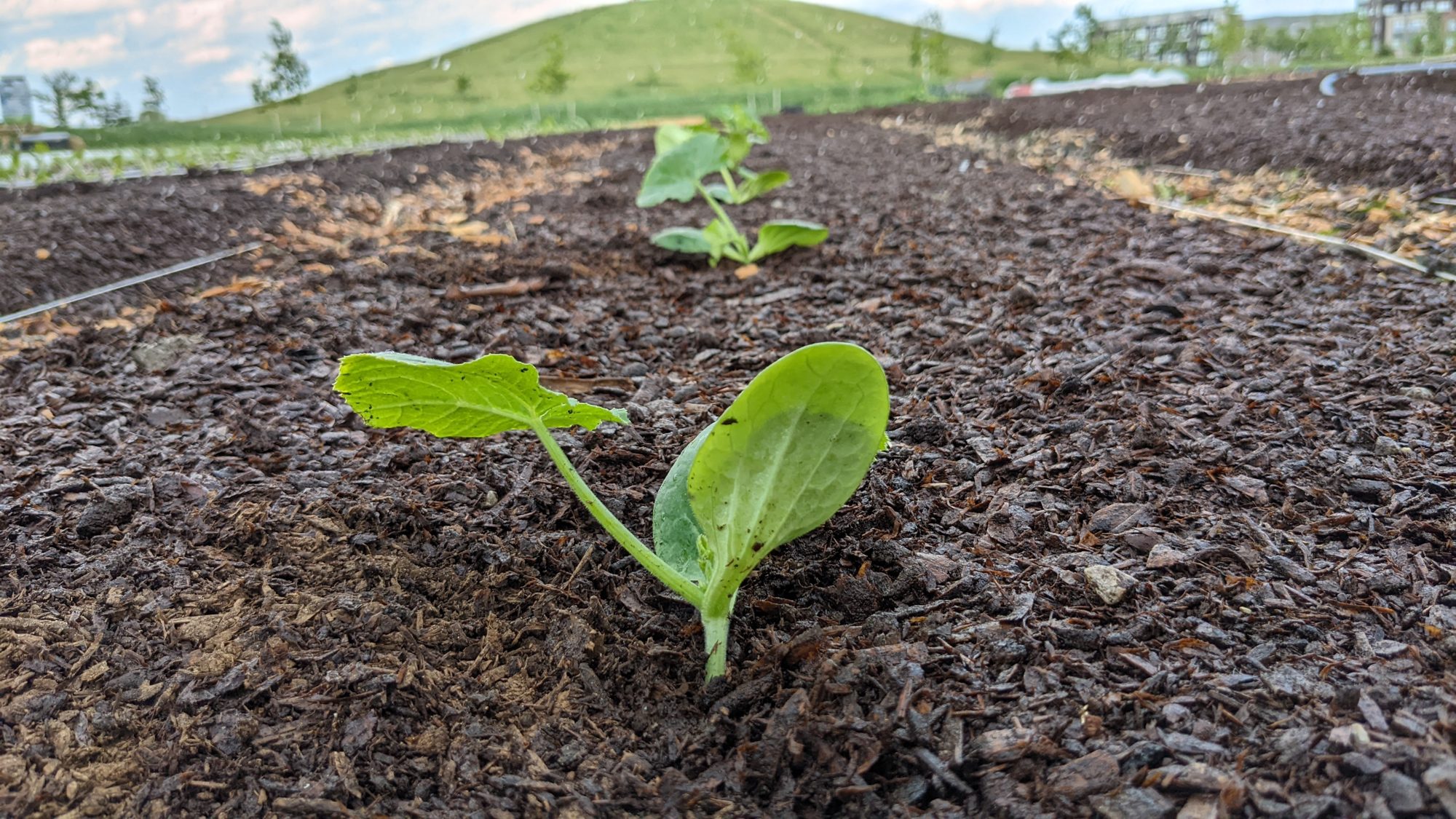
Mulch to keep it covered
Wood chip mulch on beds and paths shades the soil, holds moisture and feeds soil life as it breaks down.
Covering the soil all winter
Seven cover crops, one job: keep the soil alive.
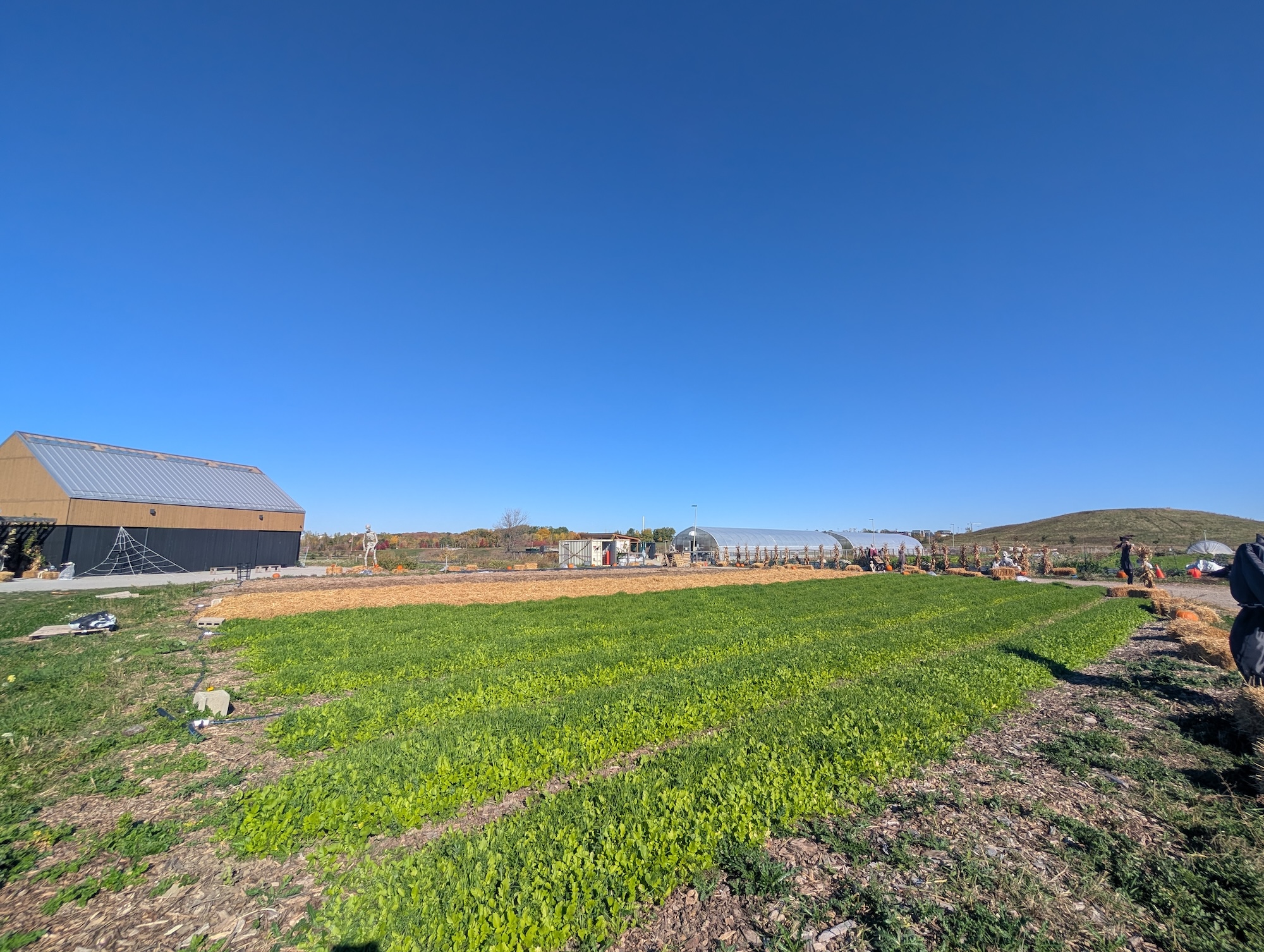
Bare soil loses life over the cold months, and our site at Downsview is open and windy. So every fall we sow a seven-species cover crop across our active beds. Living roots keep feeding the soil food web until we plant again in spring. The mix worked well, so we sowed the same one again in fall 2026.
45%
Winter rye
Holds the soil against wind; survives winter and becomes mulch in late May.
15%
Daikon radish
Deep roots break up compaction, then rot in place and leave channels for water and air.
10%
Hairy vetch
Fixes nitrogen: an estimated 100 to 150 lbs per acre if it flowers.
10%
Buckwheat
Up in 3 to 5 days; shades the soil and holds back fall weeds.
8%
Crimson clover
Fixes nitrogen (an estimated 70 to 130 lbs per acre) and feeds pollinators in spring.
7%
Austrian winter peas
Cold-hardy; leaves a nitrogen-rich mulch for spring crops.
5%
Oats
Dies back in winter, leaving residue that is easy to plant into.
Why this mix
Grasses, a brassica and legumes together put a wide range of compounds into the soil through their roots, which feeds a wider range of soil life. The legumes, a quarter of the mix, are expected to fix an estimated 90 to 180 lbs of nitrogen per acre, so we buy less compost and fertilizer. Two to three weeks after the covers come up, we apply compost tea to bring biology to the roots.
No herbicide
We never use herbicide to end a cover crop. Frost ends the buckwheat, daikon and oats. In late May we crimp the rye, mow the vetch and clover, and tarp anything that regrows, then plant into the mulch.
Mix and estimates from our Winter 2025 Cover Crop Program, sown again in fall 2026. Nitrogen figures are the plan's estimates, not measurements.
Why it matters for the food
Better soils, better crops, better foods.
Soil health and nutrition are linked. Research on paired farms has found more vitamin K and calcium in crops from soil-building farms. We plan to test our own harvest for nutrient density, and the results will go on this page when we have them.
Source: Montgomery et al., 2022, a comparison of crops from regenerative and conventional farms.
Stewardship
Soil is held in trust.
Stewards work with the soil, maintain it and grow with it, then teach whoever will care for it next. We farm at Downsview Park as part of the Many Hands Urban Farm Collective, and the soil we build there is meant to outlast any one season.
Land stewardship with Zawadi
Built on this soil
The harvest is decided underground.
Every crop we grow starts with the soil food web at Downsview Park. We feed it with compost, protect it with cover crops and mulch, and test it, because better soils make better crops and better foods.